Placement of Coolant Fan Switch on 06 Silverado 6.0
Ignite generation:
Engines return heat aside the amount of fuel burned. RPS don't play a bountiful role therein, since you can rev an engine to high RPS, if the warhead is low you won't need to use much confine to reach those RPS and successively not burn that much fuel.
When your engine is powering a generator with gearboxes increasing author RPS, your engine load testament be high, throttle will be sitting at 1 and the fuel consumption will be measured in barrels per second, then you're in for a warm welcome.
Coolant scaling:
As of 1.1.26 I've not seen the coolant grading to work. It was supposed to slowly thin out cooling efficiency with salt buildup over time, but for both reason this isn't employed properly.
I haven't successful some tests using engineer sea water cooling since I expect IT to be fixed, and with its premeditated functionality to harm engines in the long haul information technology's not a recommended way of chilling.
Piping:
The most efficient setup in footing of piping has a single heat exchanger per coolant manifold.
If you add multiple warmth exchangers to a single coolant manifold, the second in line will have fewer than 50% flowrate of the first one, which makes running heat exchangers asynchronous a terrible mind.
Flowrate connected a single stir up exchanger:

Heavy reduced flowrate on the back hot up exchanger when piped in serial publication:

Use engine manifolds to reach your heat exchangers and aim coolant manifolds in a sense that leaves the to the lowest degree amount of pipes between coolant manifold paper, pumps and heat exchangers.
This is a basic example of how an optimal layout looks like:
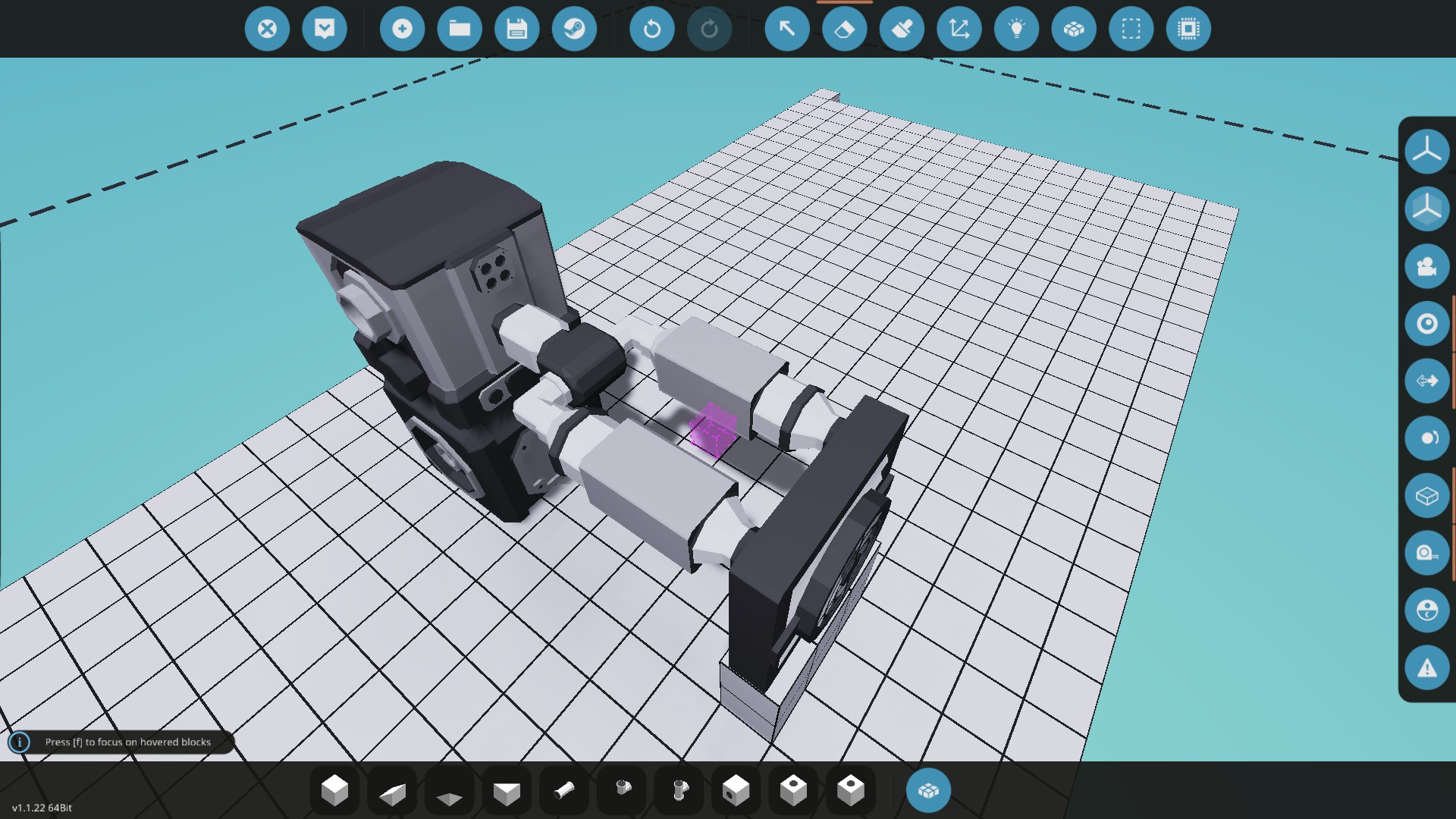
Naturally you mightiness need more than one heat exchanger, so you need to place multiple coolant manifolds on your engine manifolds, like so:

These are barely examples of the layout, you leave of course unravel into space constraints and can adapt to that, a many compact layout would look like that:

It is eventful to bread and butter as few pipes 'tween the components A necessary.
Coolant tanks:
You do non need fresh water tanks for radiators.Breeze/Runny and Liquid/Thawed inflame exchangers delete coolant upon spawn for some argue, while 3x3 and 5x5 radiators are not affected by this.
Bug ticket:
http://mcro.org/issues/exploiter/319089
This hemipteran is presently existence investigated and is the reason why you need to add fresh water tanks to the pipe network.
There does non appear to be a sureshot way to tell where to best place those tanks, I've located them betwixt money changer outlet and wall plug pump and got a static rate of flow when looking at the heat exchanger.
Heat exchanger placement:
Coolant manifolds act like fluid ports on a tailored tank.
The number on coolant manifolds displays the current coolant volume in the smooth pipe circle.
In that respect is atomic number 102 input/output side, both sides can be used to pump in/out. You could use one manifold paper and pump out from some of its connections.
, called A and B. Make a point the B connectors are connected to the engines coolant manifold paper and the A side to sea water system. Other way more or less didn't provide any cooling during my test runs.
When using Watery/liquid heat exchangers, make bound the seawater outlet is above the water level.Other the pumps will throw to fight remote pressure, leading to blackmail fluctuations. Thanks @Captain for bringing that up in the scuttlebutt section.
Efficiency:
For getting an effective chilling system IT is mandatory to have a high flowrate deep down the cooling system components.
The flowrate can be seen with the advanced tooltip.
If information technology is heavily fluctuating its usually an index number that you either don't stimulate enough coolant (does not hold to radiators) Oregon not enough pumps. Having a single heart on inlet and another pump on the outlet side seems to stabilis the flowrate, so you sack see a constant, stable number when looking at the tooltip.
Currently there seems to glucinium a bug with cooling system components where uttermost flowrate will be at ~107l/s with shrimpy pumps on the temperature reduction constituent in/prohibited connections.
Bug fine:
HTTP://mcro.org/issues/view_issue/31136
Large pumps and large impeller pumps allow less flow and should not be used if you require to maximise cooling efficiency, this might alteration depending on how this bug volition be regressive.
Close Temperature:
Ambient temperature also plays into cooling efficiency. Cooling in the arctic doesn't require as much effort as further south. I've observed a maximum temperature of around 40° roughly 20km southland of sawyer islands. Note that seasons likewise are a thing and ambient temperatures are stage-struck aside that.
Seeing how new islands are being introduced to the stake, and, from the looks of it, seem to follow located southeastward of sawyer islands, I suggest as a mere precaution to aim for a stable engine temperature at 90° so the engine won't overheat even in hot climates. IT cadaver to be seen how far south those islands testament comprise, so take this with a grain of salt.
Supercharging:
Naturally aspirated standard engines are instead tame in price of heat generation. Supercharging them stool increase their power output at least aside a factor of 2, which increases air and fire consumption and also results in a bigger heat multiplication. If you have a supercharged engine then there's no way about victimization fan radiators, since these are the most effective cooling components.
Supersize me:
If you receive the space it's always worth going with Sir Thomas More cylinders or a bigger engine.
Thomas More engine power means you can run the locomotive with less throttle to reach your desired speeds, which allows for cooler running engines.
Take a await at my Dieselpunk train on the workshop, which is using a 8cyl 5x5, which is absolutely big and does non ask any chilling at totally.
Placement of Coolant Fan Switch on 06 Silverado 6.0
Source: https://steamcommunity.com/sharedfiles/filedetails/?id=2488618797
Postar um comentário for "Placement of Coolant Fan Switch on 06 Silverado 6.0"